Types of Woodworking Tools
The woodworking world is divided into two major camps or philosphies as far as tooling goes. While some woodworkers of all ages enjoy the slower, more zen pace and art of using only hand-tools most prefer the speed and convienience of modern power-tools. That said, even the "power-tool" adherants do have to use some hand tools from time to time. Below is a list of both hand and power tools that are common to both philosphies of woodworkers.
Hand Tools
Wood Chisel |
|
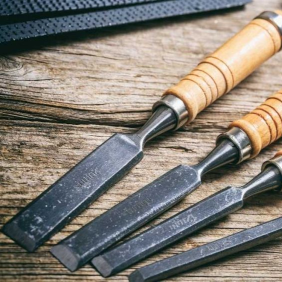
| Chisels have a fascinating history that dates back to the Stone Age, making them one of the oldest and most essential tools in human civilization. In ancient times, chisels were crafted from flint, a durable material readily available during that era. As humanity progressed and developed new skills in working with metals, chisels made of copper, bronze, and eventually iron became prominent. | |
Hand Plane |
|
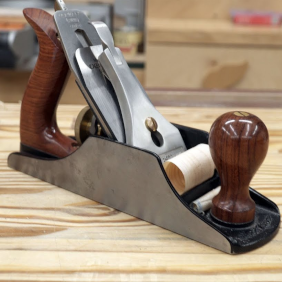
| The history of woodworking hand planes dates back nearly two millennia, with the earliest known designs found in ancient Rome and Egypt. Overall, hand planes have been indispensable tools in woodworking, evolving from simple wooden blocks to sophisticated precision instruments. | |
Power Tools
Planner |
|
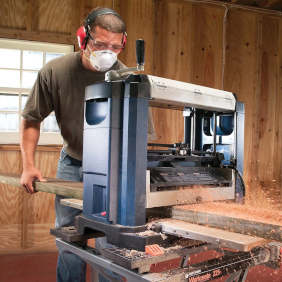
| The modern woodworker uses a Planner, sometimes called a "thincknesser" to both make the board thinner as well as ensure that the two faces of the board are "co-planner", or in other words that they are parallel to each other. This operation ensures the woodworker is working with material that is both flat and of the same thickness. | |
Router |
|
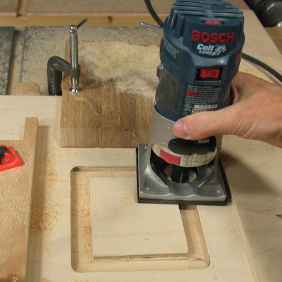
| The router is another indespensible power tool of the modern woodworker. The router is used for numerous operations from carving edge details on a project to, with the addition of a template, creating an exact copy of a pattern in a process known as "Pattern Routing". This process is crucial in creating duplicates of parts. | |
The Sounds of Sawing